

Unexpected European Church Was Just Named the World’s Best Building: If you’re picturing the Taj Mahal or the Burj Khalifa when someone says “world’s best building,” think again. In 2025, the title of World Building of the Year went to a quiet, rugged concrete church tucked away in a working-class neighborhood in Tenerife, Spain: the Holy Redeemer Church and Community Centre of Las Chumberas. Designed by Spanish architect Fernando Menis, this unassuming church beat out skyscrapers, museums, and luxury towers to be crowned the planet’s top building at the World Architecture Festival (WAF) in Miami. It’s not flashy, but it’s powerful — and it’s a perfect example of how great architecture can change lives, not just win awards.
Unexpected European Church Was Just Named the World’s Best Building
The Holy Redeemer Church and Community Centre of Las Chumberas proves that the world’s best building doesn’t have to be the tallest or the flashiest. Sometimes, it’s a humble concrete church in a working-class neighborhood that uses light, community, and local materials to create something truly special. For architects, planners, and anyone who cares about cities and communities, this project is a powerful reminder that great design is about people, place, and purpose — not just about winning awards.
| Feature | Detail |
|---|---|
| Official Name | Holy Redeemer Church and Community Centre of Las Chumberas |
| Location | San Cristóbal de La Laguna, Tenerife, Spain |
| Architect | Fernando Menis (Menis Arquitectos) |
| Year Completed | 2021 (community center opened earlier) |
| Total Area | 1,050 m² (about 11,300 sq ft) |
| Main Material | Exposed concrete with local volcanic stone (picón) |
| Key Awards | World Building of the Year 2025 (WAF), Faith & Form Honor Award 2022 |
| Community Role | Church, community center, public square, urban renewal catalyst |
What Makes This Unexpected European Church So Special?
The Big Win: Unexpected European Church Was Just Named the World’s Best Building of the Year 2025
At the 2025 World Architecture Festival, hundreds of architects from around the globe gathered to see who’d take home the top prize: World Building of the Year, sponsored by GROHE. After days of presentations and judging, the award went to the Holy Redeemer Church and Community Centre of Las Chumberas in La Laguna, Tenerife, Spain, designed by Fernando Menis. This church isn’t just a place of worship — it’s a full community hub with a church, a community center, and a public square, all wrapped into one powerful project. The jury called it “amazing work” that uses light and texture to create spiritual, intimate spaces, and praised how it blends symbolic meaning with everyday community needs.
Why a Church? And Why This One?
You might wonder: why would a church win the “world’s best building” over a high-tech office tower or a futuristic museum? The answer is simple: this church solves real problems. Las Chumberas is a neighborhood on the outskirts of La Laguna, made up of 1970s housing blocks, shopping centers, and industrial buildings. It lacked a clear identity and a real public heart. The Holy Redeemer Church was designed to be that heart — a place where people could gather, worship, and feel pride in their community. The World Architecture Festival jury loved how the building acts as a catalyst for urban renewal, turning a neglected, fragmented area into a landmark that gives the neighborhood a new sense of place.
How the Holy Redeemer Church Was Built?
A Project Born from the Community
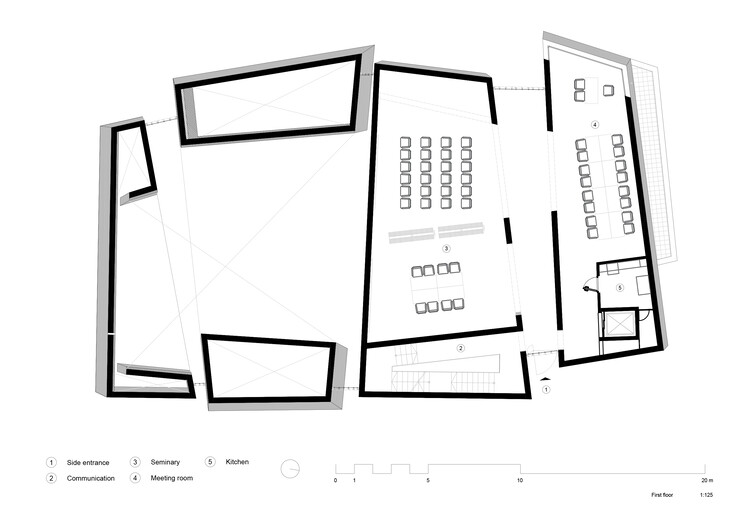
The Holy Redeemer Church wasn’t funded by a billionaire or a big government grant. Instead, it was built brick by brick, donation by donation, through small contributions from local residents, businesses, and the Bishopric of Tenerife. This grassroots funding meant construction happened in phases over more than 15 years. The community center (two of the four main volumes) was finished and in use by 2008, while the rest of the church was completed later as money came in. This “stop-and-start” rhythm actually shaped the design: the building is made of four independent concrete volumes that feel like separate rocks, connected by narrow glass-and-metal cracks. That irregular, almost geological form is a direct result of how the community raised funds over time.
Design Inspired by Volcanic Tenerife
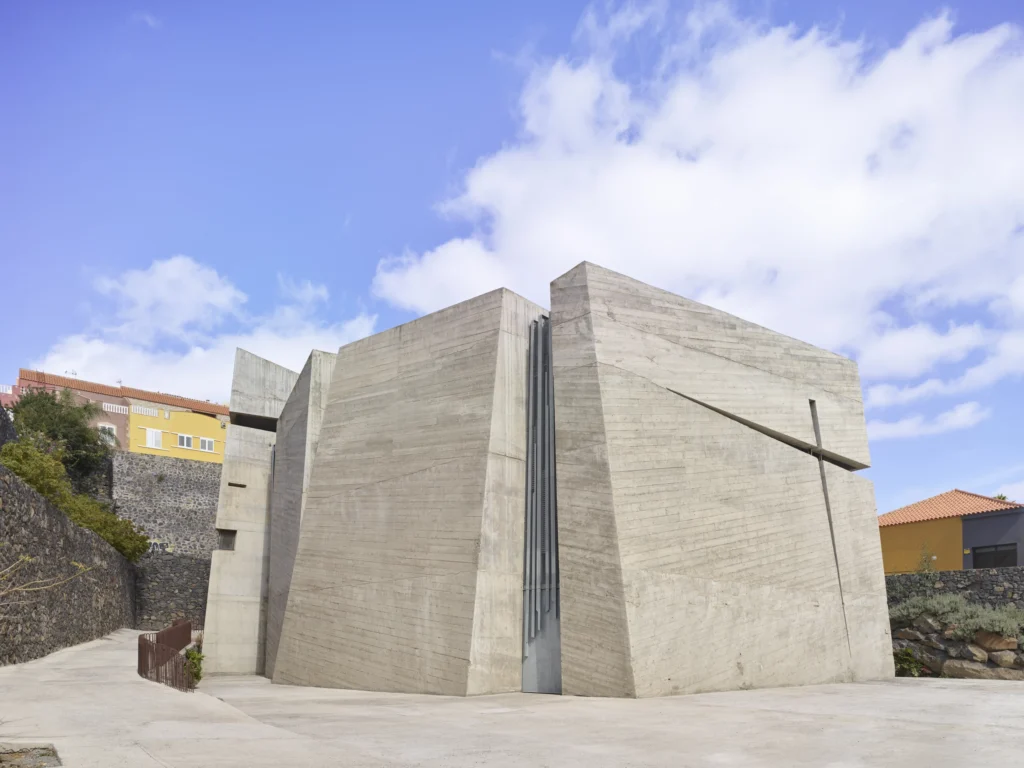
Fernando Menis looked to Tenerife’s dramatic volcanic landscape for inspiration. The church’s four massive concrete blocks are meant to resemble giant, restless rocks that have erupted from the ground. The rough, exposed concrete stands in sharp contrast to the ordinary apartment blocks around it, like nature fighting back against bland, cookie-cutter development. The building is embedded in the ground, so it feels rooted in the island’s geology, not just plopped on top of it. This “low-tech innovation” uses simple, local materials (concrete and volcanic stone) in a smart way, keeping costs down while creating something that feels timeless and powerful.
Light as a Spiritual Tool
One of the most genius parts of the design is how it uses natural light. Instead of big windows, the church relies on narrow cracks between the concrete blocks, filled with glass and sculptural metal, to let daylight filter in. These cracks create a minimalist, almost cave-like interior that feels both austere and warm. The light is carefully choreographed to highlight key moments in Christian worship:
- At sunrise, light enters through a cross-shaped opening, flooding the space behind the altar like a symbolic cave (referencing the tomb of Jesus) and illuminating the baptismal font.
- At noon, a skylight bathes the altar, confirmation area, and communion space in bright light.
- Later in the day, a shaft of light falls on the confessional, adding a dramatic, intimate touch.
This isn’t just pretty lighting — it’s architecture that tells a story and guides people through their spiritual journey, moment by moment.
Acoustics That Feel Like an Opera House
Great architecture isn’t just about how a building looks; it’s also about how it sounds. The Holy Redeemer Church uses concrete in a clever way to create excellent acoustics for both speech and singing. Concrete is often seen as “cold” or “echoey,” but here it’s treated differently:
- For sound diffusion, regular exposed concrete scatters sound evenly.
- For sound absorption, the concrete is mixed with light, porous volcanic stone (called picón) and then chipped, creating a rough surface that soaks up sound.
The result? A space that feels acoustically rich, almost like an opera house, perfect for sermons, hymns, and community events. The Faith & Form jury specifically praised the attention to acoustics and daylighting, calling it a standout in sacred architecture.
Sustainability and Innovation
Eco-Friendly Materials and Energy Efficiency
The Holy Redeemer Church is a model of sustainable architecture. Its thick concrete walls have high thermal inertia, which means they absorb heat during the day and release it slowly at night, reducing the need for artificial heating and cooling. This natural insulation helps keep the building comfortable year-round and cuts down on energy use. The use of locally-sourced volcanic stone (picón) not only connects the building to its environment but also reduces the carbon footprint associated with transporting materials from far away.
Architectural Innovation
Fernando Menis’s design is a masterclass in architectural innovation. The four concrete volumes are arranged to bridge the dramatic topographical changes of the site, with a perimeter ramp providing access to the church and community center. This ramp not only solves a practical problem but also creates a welcoming, inclusive entrance. The church’s design is stripped of unnecessary ornamentation, focusing instead on the play of light and texture to create a spiritual atmosphere. The result is a building that feels both monumental and intimate, a place where people can gather, reflect, and find community.
Construction Techniques and Challenges
Building the Holy Redeemer Church was no easy feat. The site’s uneven terrain required innovative engineering solutions, including the use of reinforced concrete and careful site planning to ensure stability. The construction team had to work around the existing neighborhood, minimizing disruption to residents. The use of local labor and materials not only supported the local economy but also ensured that the building was deeply rooted in its context. The phased construction allowed the community to see progress and remain engaged throughout the process, fostering a sense of ownership and pride.
Community Programs and Social Impact of This Unexpected European Church Was Just Named the World’s Best Building
Building a Community Hub
The Holy Redeemer Church isn’t just a place for worship; it’s a vibrant community hub. The complex includes a community center and a public square, providing space for meetings, events, and daily life. Local residents can participate in a variety of programs, including youth groups, adult education, and social outreach initiatives. These programs help build strong, resilient communities and provide support for those in need.
Social Outreach and Support
The church runs several social outreach programs, such as a free community lunch every Thursday, which is open to everyone, regardless of background or circumstance. The church also has ministries focused on youth, adults, and the elderly, ensuring that all members of the community feel welcome and supported. These programs foster a sense of belonging and help address social issues like poverty and isolation.
Educational and Cultural Activities
The community center hosts a range of educational and cultural activities, from language classes and computer workshops to art exhibitions and music performances. These activities not only enrich the lives of local residents but also attract visitors from other parts of Tenerife, helping to put Las Chumberas on the map as a cultural destination. The church’s commitment to lifelong learning and cultural enrichment is a testament to its role as a true community hub.
Why This Church Matters for Architects and Communities?
Architecture as Urban Renewal
The Holy Redeemer Church is a textbook example of how architecture can be a catalyst for urban renewal. Las Chumberas didn’t have a clear center or identity before this project. Now, the church complex — with its church, community center, and green public square — gives the neighborhood a real heart. It’s not just a building; it’s a public meeting place that brings people together, fosters pride, and helps transform a neglected area into a vibrant community. For architects and city planners, this is a powerful lesson: great design doesn’t have to be flashy or expensive to make a huge impact.
A Model for Community-Driven Projects
For anyone thinking about building a community center, church, or public space, the Holy Redeemer Church offers a practical blueprint:
- Start small and build in phases if money is tight (like the community center opening first).
- Use local, affordable materials (like concrete and local stone) to keep costs down and support the local economy.
- Design for both symbolic meaning and everyday use — a space that feels sacred but also works for meetings, events, and daily life.
- Let the community shape the project through donations, input, and ownership.
This “Km 0 architecture” (using local materials and labor) is not only sustainable but also deeply rooted in its place, making it more authentic and resilient.
45 Genius Money-Saving Hacks From People Who Live Alone; You’ll Wish You Knew These Sooner
5 Urgent Money Moves to Make Before 2026; Build Wealth and Save Thousands Starting Jan 1